

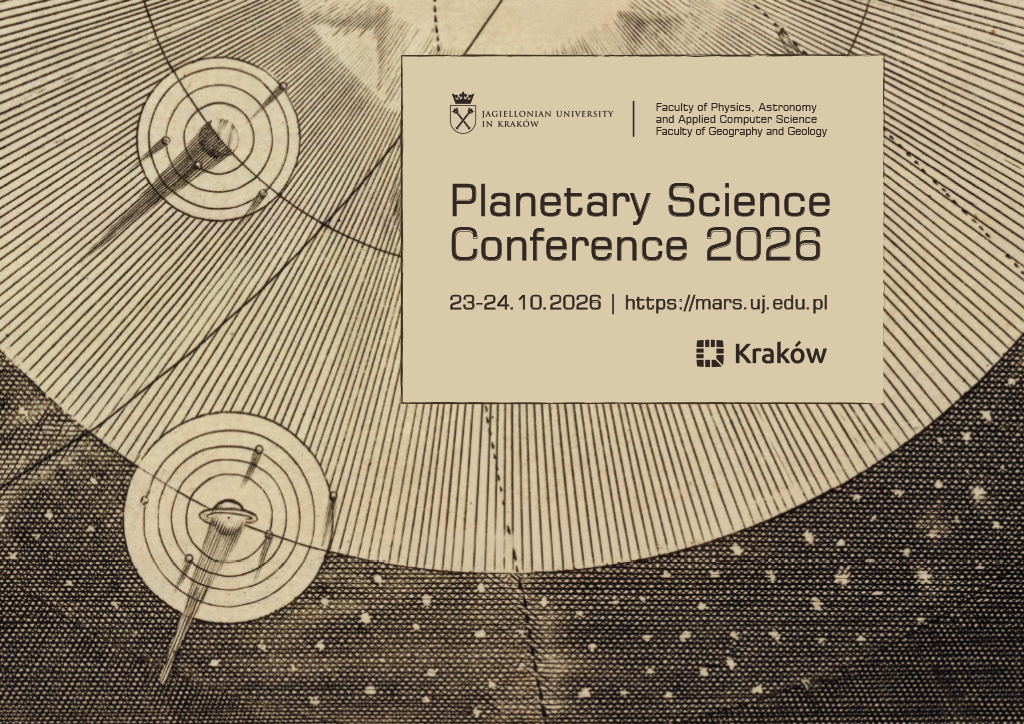
The Planetary Science Conference 2026 will take place October 23-24 in Krakow as a hybrid event. Scientists and researchers from institutions in Poland and abroad are invited to participate.
The PSC 2026 consists of 3 parts: a scientific session (talks and posters), a field trip, and the Planetary Day (a public outreach event).
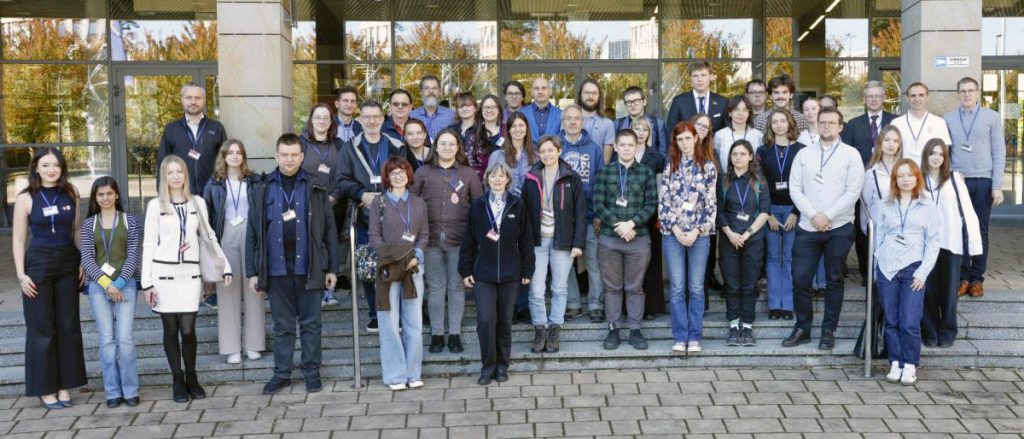
Summary of the event with a photo gallery (in Polish): https://fais.uj.edu.pl/
The PSC2026 schedule and book of abstracts are now available on the Indico platform:
PSC2026 PROGRAM
October 23:
9:00-10:00 am: Registration
10:00-11:50 am: Scientific session 1 – Talks
12:00-1:00 pm: Scientific session 2 – Posters
1:00-2:30 pm: Lunch break
2:30-4:00 pm: Scientific session 3 – Talks
4:00-4:15 pm: Coffee Break
4:15-5:55 pm: Scientific session 4 – Talks
6:00-7:00 pm: Touring the laboratories
October 24:
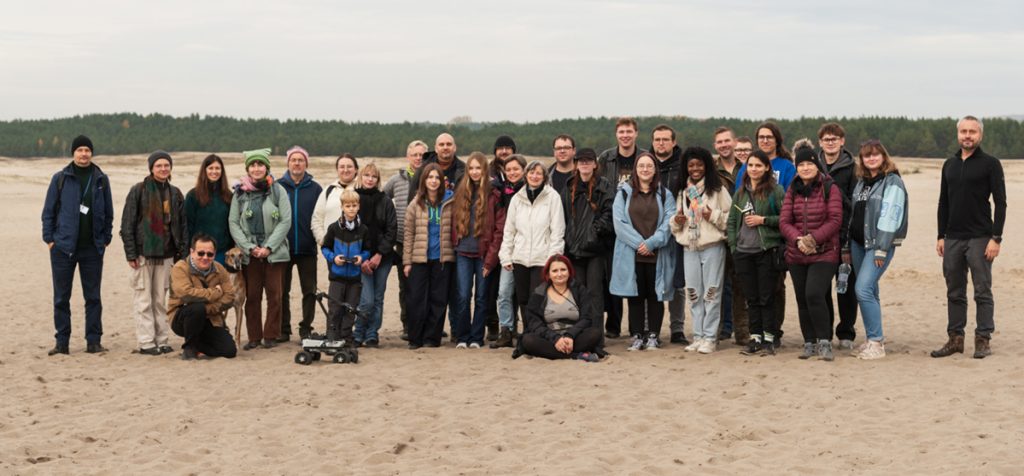
8:00 am-3:00 pm: Field trip and workshops at the Błędów Desert
5:00-8:00 pm: The Planetary Day lectures (40-minute lectures with 15-minute Q&A sessions, event in Polish):
- 5:00 pm: Nie tylko Ziemia wybucha! Wulkanizm w Układzie Słonecznym.
Dr Bartosz Pieterek (Adam Mickiewicz University in Poznań)
- 6:00 pm: Komety – kosmiczni włóczędzy.
Dr Piotr Guzik (Jagiellonian University in Krakow)
- 7:00 pm: Jak planeta staje się żywa? O początkach życia na Ziemi i poza nią.
Dr Tomasz Zajkowski (AGH University of Science and Technology)
All times are in Central European Summer Time, CEST (UTC +2 hours)
The conference proceedings will be published in SCOPUS indexed journals.
Objectives and scope of the PSC 2026:
- Presentation of current achievements in planetary science
- Development of planetary and space science in Poland and beyond
- Integration of the Polish planetary scientist community
- Strengthening international cooperation in planetary science
Topics of interest for submission include, but are not limited to:
- Planets (apart from Earth), dwarf planets, moons, small objects of the Solar System
- Exoplanets
- Research associated to:
- Current and past planetary missions
- New methods and tools for future space exploration
- Laboratory experiments
- Simulations and theoretical investigations
- Terrestrial analog studies
Organizers
Co-Organizers
- Space Research Centre, Polish Academy of Sciences
- Warsaw University of Technology, Faculty of Geodesy and Cartography
Honorary Patronage
- Dean of the Faculty of Physics, Astronomy and Applied Computer Science UJ
Prof. dr hab. Zbigniew Postawa - Dean of the Faculty of Geography and Geology UJ
Prof. dr hab. Marek Drewnik
Patrons
Partners
Scientific Committee
- Prof. dr hab. Kazimierz Krzemień (Faculty of Geography and Geology, Jagiellonian University)
- Prof. dr hab. Robert Olszewski (Faculty of Geodesy and Cartography, Warsaw University of Technology)
- Dr hab. Joanna Gurgurewicz (Space Research Centre, Polish Academy of Sciences)
- Dr hab. Daniel Mège (Space Research Centre, Polish Academy of Sciences)
- Dr hab. Marian Soida (Faculty of Physics, Astronomy and Applied Computer Science, Jagiellonian University)
- Dr Joanna Kozakiewicz (Faculty of Physics, Astronomy and Applied Computer Science, Jagiellonian University)
Organizing Committee
- Dr Joanna Kozakiewicz (FAIS UJ)
- Dr Maciej Kania (ING UJ)
- Dr Krzysztof Ninard (ING UJ)
- Dr Mateusz Sobucki (IGIGP UJ)
- Dr Mateusz Szczęch (ING UJ)
- Mgr Nikodem Frodyma (FAIS UJ)
- Mgr Anna Gawlik (FAIS UJ)
- Mgr Szymon Mol (UJ)

Konferencja odbywa się w ramach inicjatywy Krakowskie Konferencje Naukowe